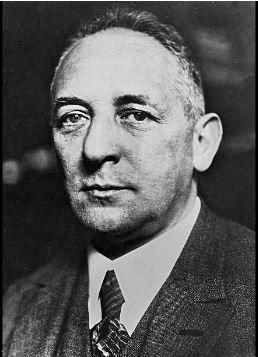
The history of medical biochemistry is deeply intertwined with the broader history of biochemistry, which emerged as a scientific discipline in the 19th century, evolving from ancient philosophical inquiries into the nature of life. The title of the Father of medical biochemistry or the Father of modern biochemistry is most commonly attributed to Carl Alexander Neuberg (1877–1956), a German chemist. Neuberg was a pioneering figure who significantly shaped biochemistry as a distinct scientific discipline.
Early Foundations:
- The roots of biochemistry trace back to the ancient Greeks, who were interested in the composition and processes of life, though they lacked the scientific tools to explore these at a molecular level.
- In the 18th century, pioneers like Antoine Lavoisier laid the groundwork by elucidating the chemical nature of respiration and metabolism, showing that biological processes could be explained by chemistry.
Key Milestones in Biochemistry:
- 1828: Friedrich Wöhler synthesized urea artificially, disproving the vitalist belief that organic compounds could only be produced by living organisms. This event is often cited as the birth of organic chemistry and a turning point for biochemistry.
- 1833: Discovery of the first enzyme, diastase (now called amylase), by Anselme Payen, marking the beginning of enzymology, a core part of medical biochemistry.
- 1896: Eduard Buchner demonstrated alcoholic fermentation in cell-free yeast extracts, proving that biochemical processes could occur outside living cells, which many consider the formal birth of biochemistry as a discipline.
- 1877: Felix Hoppe-Seyler used the term "biochemistry" (in German, *Biochemie*) to describe physiological chemistry, advocating for dedicated institutes to study the chemistry of life.
- The term "biochemistry" was popularized by German chemist **Carl Neuberg** in 1903, who defined it as the science describing the structure and function of living organisms in chemical terms.
20th Century Advances Relevant to Medical Biochemistry:
- 1953: James Watson and Francis Crick discovered the double helix structure of DNA, revolutionizing molecular biology and medical biochemistry by revealing the chemical basis of heredity.
- 1953: Hans Adolf Krebs elucidated the Krebs cycle, a fundamental metabolic pathway in cellular respiration, central to understanding energy production in cells.
- Development of techniques such as radioimmunoassay (RIA) in the 1970s enabled precise measurement of hormones and other biomolecules, critical for medical diagnostics.
- Discovery and application of monoclonal antibodies in the 1970s and 1980s transformed diagnostics and therapeutics in medicine.
- Advances in molecular biology, enzymology, and metabolism throughout the 20th century firmly established medical biochemistry as essential for understanding health and disease.